

Wounds
that won't heal
finally have somewhere to go.
For chronic, complex, slow-healing wounds — diabetic ulcers, vascular wounds, surgical breakdowns, radiation injury — Midwest Hyperbarics is Sioux Falls' dedicated wound care practice. Specialized training. Modern materials. Real time with your provider.

at intake
with a chronic wound
under one roof
plans accepted
large health systems
This is all we do.and it should be done well.
Wound care moves fast. New dressings, new graft technologies, new evidence every year. Most clinics treat wounds as a side concern. We don't — and that difference shows up in how quickly your wound closes.
You've probably been somewhere already. Maybe a primary care office that swapped your dressing every two weeks. Maybe an in-system wound clinic that scheduled you out a month. Maybe a hospital that mentioned amputation a little too quickly. We hear those stories every week. You're not alone in this — millions of people are living with wounds that won't heal, and most have been to a clinic that wasn't built for it.
At Midwest Hyperbarics, wound care is a dedicated specialty practice — not a hallway off a hospital. That means more time per visit, faster access to advanced therapies, and direct coordination with your vascular surgeon, primary care provider, and specialists.
Wound care doesn't have to be a slow grind. With the right plan, the right materials, and a provider paying close attention, most chronic wounds close. Even the ones that have been open for years.
10.5 million Americans aren't healing.
Chronic, non-healing wounds aren't rare. They're a quiet epidemic — under-diagnosed, under-treated, and growing alongside diabetes, vascular disease, and an aging population. Every wound type below is one we treat.
If it won't close — bring it.
Tap any condition to see how we approach it. Most are covered by Medicare and major insurance. Hyperbaric oxygen is added when clinically indicated.
01 Diabetic foot ulcers +
The single most common reason patients come to us — and the most preventable cause of amputation. Diabetic ulcers are deceptive: they look small, they don't always hurt, and they can deteriorate quickly when neuropathy and poor perfusion are involved.
Our approach combines offloading, debridement, advanced moisture-balanced dressings, biologic skin substitutes when appropriate, and hyperbaric oxygen for Wagner Grade 3+ wounds. We coordinate directly with your endocrinologist and podiatrist.
- Visit cadenceWeekly
- Healing window8–16 wks
- HBOT eligibleWagner ≥3
- InsuranceYes
02 Arterial & venous wounds +
Wounds caused by poor blood flow — peripheral artery disease — or by chronic venous insufficiency are among the most under-treated wound categories. Many patients have spent years with bandages that aren't doing the right thing.
We work in lockstep with your vascular surgeon. Compression therapy, multi-layer wraps, careful evaluation of perfusion, and referrals back to vascular for revascularization when needed.
- Visit cadenceWeekly
- CompressionMulti-layer
- CoordinationVascular Sx
- InsuranceYes
03 Surgical wound dehiscence +
When a surgical incision opens or fails to heal — common after abdominal, orthopedic, or breast procedures — patients often bounce between the surgeon and primary care, neither equipped for ongoing wound management.
We close that gap. Negative-pressure therapy, advanced dressings, and direct communication with the original surgical team so nothing falls through.
- NPWT availableYes
- Surgeon updatesRoutine
- Avg. window4–10 wks
- InsuranceYes
04 Radiation tissue injury +
Late effects of radiation therapy — soft-tissue breakdown, osteoradionecrosis, radiation cystitis or proctitis — are one of the strongest indications for hyperbaric oxygen. We see these referrals regularly from oncology teams across the region.
HBOT stimulates new vessel growth in the affected area, often dramatically improving tissue quality before further treatment or surgery.
- HBOT sessions30–60
- Onc. coord.Always
- InsuranceYes (Medicare)
05 Pressure injuries +
Stage 2 through Stage 4 pressure injuries — including those that develop in long-term care or after extended hospitalization — require careful staging, offloading, nutrition support, and the right dressing strategy at each phase.
We collaborate with home health, skilled nursing, and family caregivers to keep care consistent.
- Stages2 – 4
- Family trainingIncluded
- Home healthCoordinated
06 Compromised skin grafts & flaps +
When a graft or flap shows early signs of failure — discoloration, edge necrosis, slow take — early hyperbaric oxygen can rescue tissue that would otherwise need to be revised.
Time matters. We accept urgent referrals from plastic and reconstructive surgery teams.
- UrgencySame/next day
- Surgical coord.Direct
- InsuranceYes
07 Trauma & crush injuries +
Soft-tissue trauma that isn't healing on schedule — including crush injuries and compartment-related complications — benefits from advanced wound care alongside any orthopedic or surgical follow-up.
- Ortho coord.Yes
- HBOT eligibleAcute crush
- InsuranceYes
Three things we dodifferently.
Most patients tell us their first visit feels nothing like what they were used to. Here's why.
Time the wound actually needs
First visits run 60–90 minutes. Follow-ups, 30. We're not booked back-to-back like a hospital clinic, and you're not handed off to a different person every visit.
Your dressing is changed by a provider — not a tech in passing — and the plan adjusts as the wound does. You'll see the same provider every time. That continuity is most of why wounds close here when they didn't elsewhere.
Tools the systems are slower to adopt
Biologic skin substitutes. Advanced compression systems. Modern antimicrobial dressings. Negative-pressure wound therapy. On-site hyperbaric oxygen — under one roof, evaluated for every patient.
Most decisions happen the same day. No referring you out and waiting six weeks to see a specialist who decides whether to refer you somewhere else.
Real coordination — not just notes
We pick up the phone. Vascular surgery, primary care, oncology, podiatry, endocrinology — we keep your team looped in by phone, fax, or portal, whichever they prefer.
Your records don't get lost in the handoff. Your specialist often hears about progress before you do. That's how it should work.
You're not switching sides.you're adding a specialist.
The most common worry we hear: "Will my regular doctor be upset?" No. We work alongside your existing care team — they almost always welcome it.
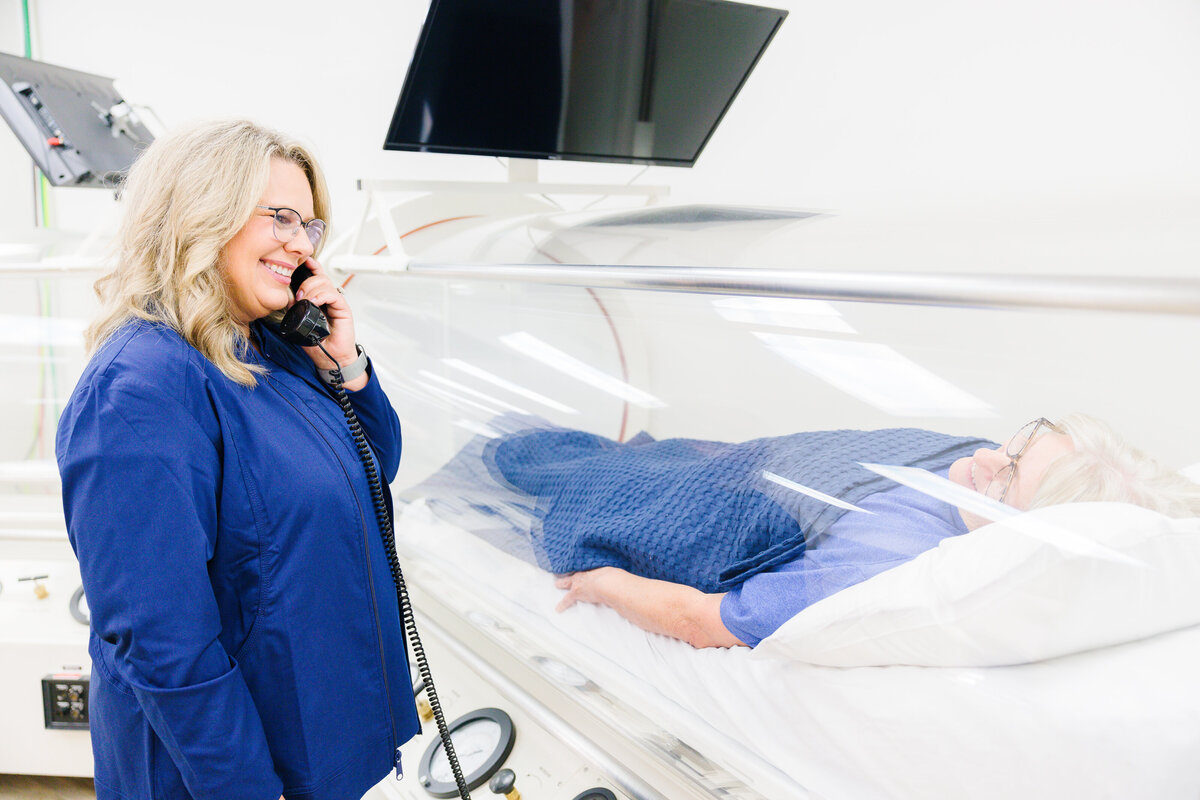
We collaborate.by default.
Most of our patients come from referrals — vascular surgeons, oncologists, primary care providers across Sioux Falls and the region. The rest find us themselves. Either way, we treat your existing team as part of our team, unless you ask us not to.
-
✓
We update your primary doctor Standard letters, fax, or chart-portal — whichever they accept.
-
✓
We talk directly to your specialist Vascular, plastics, oncology, endocrine — provider-to-provider phone calls when needed.
-
✓
We respect "please don't" Rather we not contact a particular provider? Just say so at intake.
-
✓
We don't pull you out of their system Keep your primary, your endo, your surgeon. We add to their work — we don't replace it.
The person actuallytreating your wound.
Wound care is hands-on work. You'll see the same provider visit after visit — that's not how most systems run, and it's not an accident here.
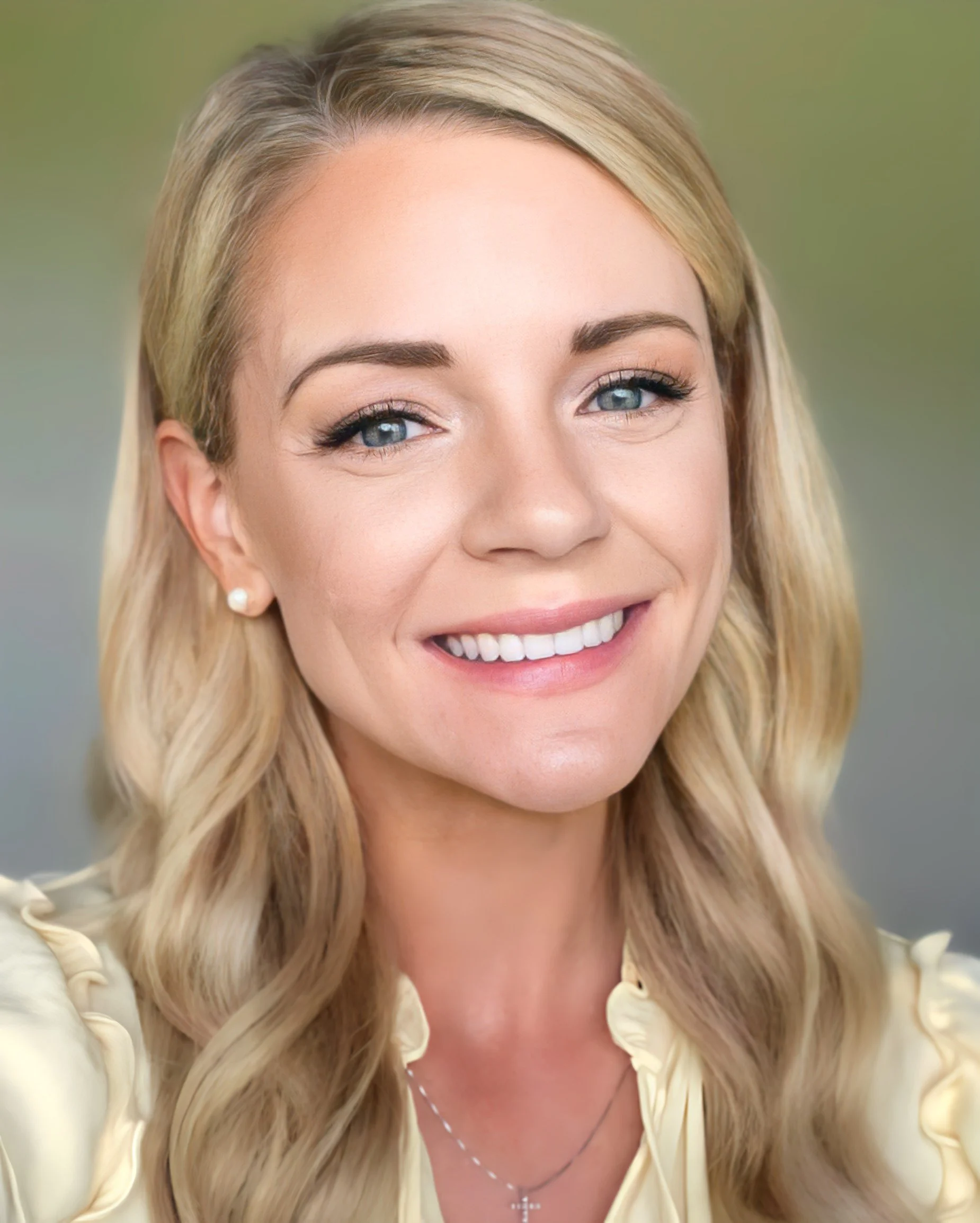
Jessica Freudenthal, DNP
Wound Care Specialist
Jessica is the newest member of the Midwest Hyperbarics team — and she came in with the rare profile of having helped start a wound care center from the ground up before. Her focus is the wounds others have given up on: chronic, complex, slow-healing wounds where the right materials, the right schedule, and a provider paying close attention add up to outcomes most clinics don't see.
She works alongside founder Daniel Todd, MD, FACS, who has been using hyperbaric oxygen therapy in his ENT practice for more than 30 years, and clinical lead Jada Hieb, DNP. The team's wound care philosophy is direct: working with vascular surgeons and podiatrists, with the right tools under one roof, most chronic wounds heal — even the ones marked impossible elsewhere.
- Specialization
- Chronic & complex wound care
- Credentials
- DNP — Doctor of Nursing Practice
- Prior experience
- Helped launch a wound care center
- Continuity
- Same provider every visit
Wounds open 3, 5 yearsclosed.
Real outcomes from real patients in the practice. Names and photos used with written permission.
His wound is nearly healed. Three months in. The kind of progress you stop believing is possible after years of treatment that didn't move.
Infection to the bone, multiple complications. We're close. He says he isn't sure he wants the wound to close — he likes coming here too much.
I send my hardest patients here. Ones I couldn't move. They communicate, they document, and the wounds actually close.
Send the wound.we'll handle the rest.
You don't need a portal login. You don't need an EMR integration. Send a fax, a phone call, or a digital referral — whichever your office runs on. We confirm receipt the same day, see the patient typically within 5 business days, and report back routinely.
If a wound has been open
longer than 4 weeks,it's time.
Free 15-minute consultation. We'll review your situation, tell you honestly whether we can help, and get you on the schedule if we can.